Therapists in Brighton & Hove
Browse our verified therapists — many work across a wide range of issues and may be able to help.
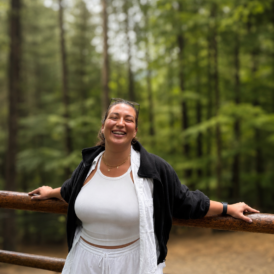 Brighton
Jaz Stroe
Therapist / Counsellor
A Registered Member of the BACP, I've trained extensively in psychodynamic psychotherapy and counselling, working with the past, memories, dreams and the unconscious. I also volunteer with two leading mental health organisations and benefit from bi-weekly supervision to deepen my knowledge and approach.I’m also a third-culture person. I grew up in the UK with mixed Romanian and Serbian heritage. I know what it's like to perform versions of yourself while quietly feeling like someone else. Cultural identity, migration, belonging and othering are all woven into my psychology and therapeutic practice.I aim to maintain a genuinely inclusive space across culture, identity, sexual orientation, relationship structure, faith, and background. I don't work from a single script of what a person, a relationship, or a life should look like. I work within an ethic of non-harm, to self and to others, and I ask the same of the therapeutic space we share.Ultimately, I came into this work wanting to understand and aid my own mental wellbeing. I've had personal therapy for over a decade. I can only take you as far as I've gone myself, and I've gone deep. In other words, you're in safe hands, and you will be held week after week, for as long as you keep showing up.
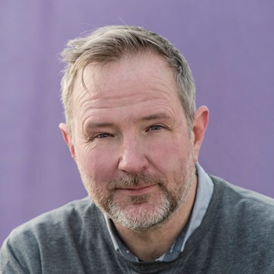 Hove
Alan Sparkes
Psychotherapist & Counsellor
An integrative psychotherapist with 20 years’ experience, working with shame and relational trauma, and with people who’ve had therapy before but found it didn’t reach the root of things.I often work with men who've spent years holding it together, and with women living with the effects of early or relational trauma. What brings people is usually anxiety or depression, but underneath there's something that has been there a long time: a harsh inner voice, a sense of never being quite good enough, relationship patterns that keep repeating, or simply not knowing why you feel the way you do.I don't do psychic amputation. You can't cut off the parts of yourself you don't like, or that cause you pain, without running into more problems. Therapy can help those parts be understood and integrated, so you can live more fully.I'm not a therapist who just nods and asks how that makes you feel. I'll tell you what I notice, and when it helps, I'll gently challenge you, always with care. I also work with couples, helping each partner understand what keeps happening between them.I am a UKCP-registered psychotherapist. I built and ran a multi-room therapy practice in Hove, lead peer groups for practitioners, founded Brighton Counselling Directory, and also counsel with the Terrence Higgins Trust in Brighton. Qualified therapists are welcome as clients.
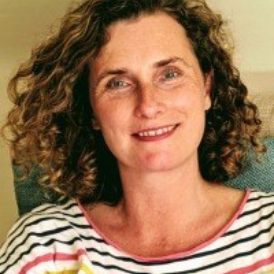 Brighton
Ayesha Daly
Humanistic Integrative Counsellor
I am an experienced Humanistic counsellor practising in Lewes and Brighton, East Sussex and believe everyone has the capacity to heal and move forward. I understand how difficult starting counselling can be and will hope to answer any queries you have. For me therapy has been incredibly important, healing and rewarding. As a counsellor I hope to offer you what I have gained.
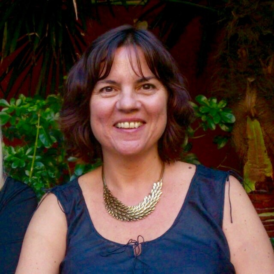 Brighton
Joanna Miller
Integrative Psychotherapist
I’m an accredited psychotherapist with 15 years experience.I believe that the counselling relationship should be a creative space for both parties. It should feel comfortable and open enough to be free from anxiety and pressure in which new perspectives can emerge. In my view most mental activity takes place below the level of conscious awareness and my role is to help people gain access to it and insights from it.As an accredited therapist I am affiliated with several private healthcare companies including BUPA and AXA. I have an up-to-date DBS certificate which is registered on the update service. As well as working with individual adults, including trainee therapists, I have many years' experience working with children, couples and families. I have been a university counsellor so have a lot of experience working with students and young people and have also worked in secondary schools.
 Brighton
Cerrie Lantrua
Counsellor
Clients often tell me how much they value having a space where they feel understood, where they don’t have to explain their neurodivergence or justify their experiences.I am neurodivergent myself, and I’m open about that. It’s not something I see as a limitation, but as something that shapes how I understand, relate, and connect. Alongside my training and experience, this gives me a way of seeing things that often helps clients feel recognised in ways they may not have experienced before.I’m naturally creative and tend to think outside the box, which allows me to consider different perspectives and gently step into what it might be like to be you, not from a place of judgement, but from a genuine willingness to understand.At the same time, I don’t assume your experience is the same as anyone else’s. No two people are the same. A big part of what I offer is taking the time to learn what you need, how you experience things, and what support feels right for you.You are the expert on yourself. My role isn’t to tell you what to do or who to be, but to walk alongside you as you begin to understand yourself more fully.I aim to create a space where you feel safe enough to be real. Where you don’t have to mask, filter, or find the “right” way to say things. A space where you can feel seen, heard, and genuinely understood.
 Brighton
Stephanie Fortescue
Psychotherapist & Counsellor
I offer both short-term and open-ended therapy, online or face-to-face. We can talk about what might suit you best during an initial consultation.My approach is relational, trauma-informed and neurodiversity-affirming. I work particularly with adults who are autistic, ADHD or AuDHD, including people who have been diagnosed or identified as neurodivergent later in life. I also work with anxiety, depression, relationship and attachment difficulties, low self-esteem, emotional overwhelm and the impact of difficult or traumatic experiences.I originally trained psychodynamically, so I am interested in how our earlier experiences and relationships can shape the way we understand ourselves, relate to other people and respond to situations in the present. However, my way of working has developed considerably over the years and now draws on a wider understanding of trauma, attachment, neurodivergence, emotional regulation and the nervous system.This means we might explore patterns in your relationships, experiences from childhood, difficult emotions or beliefs you hold about yourself. But we might equally think together about sensory overwhelm, executive functioning, masking, burnout, rejection sensitivity, emotional regulation or why everyday demands can sometimes feel disproportionately difficult.I don't believe that every difficulty needs to be traced back to childhood or that distress should automatically be viewed as something within the individual that needs to be “fixed”. Sometimes understanding your brain, nervous system and environment — and recognising where you have spent years trying to function in ways that don't suit you — can be just as important.